
Acne Scar Laser Treatment: What Works, by Scar Type
 Written byMD Esthetics Editorial Team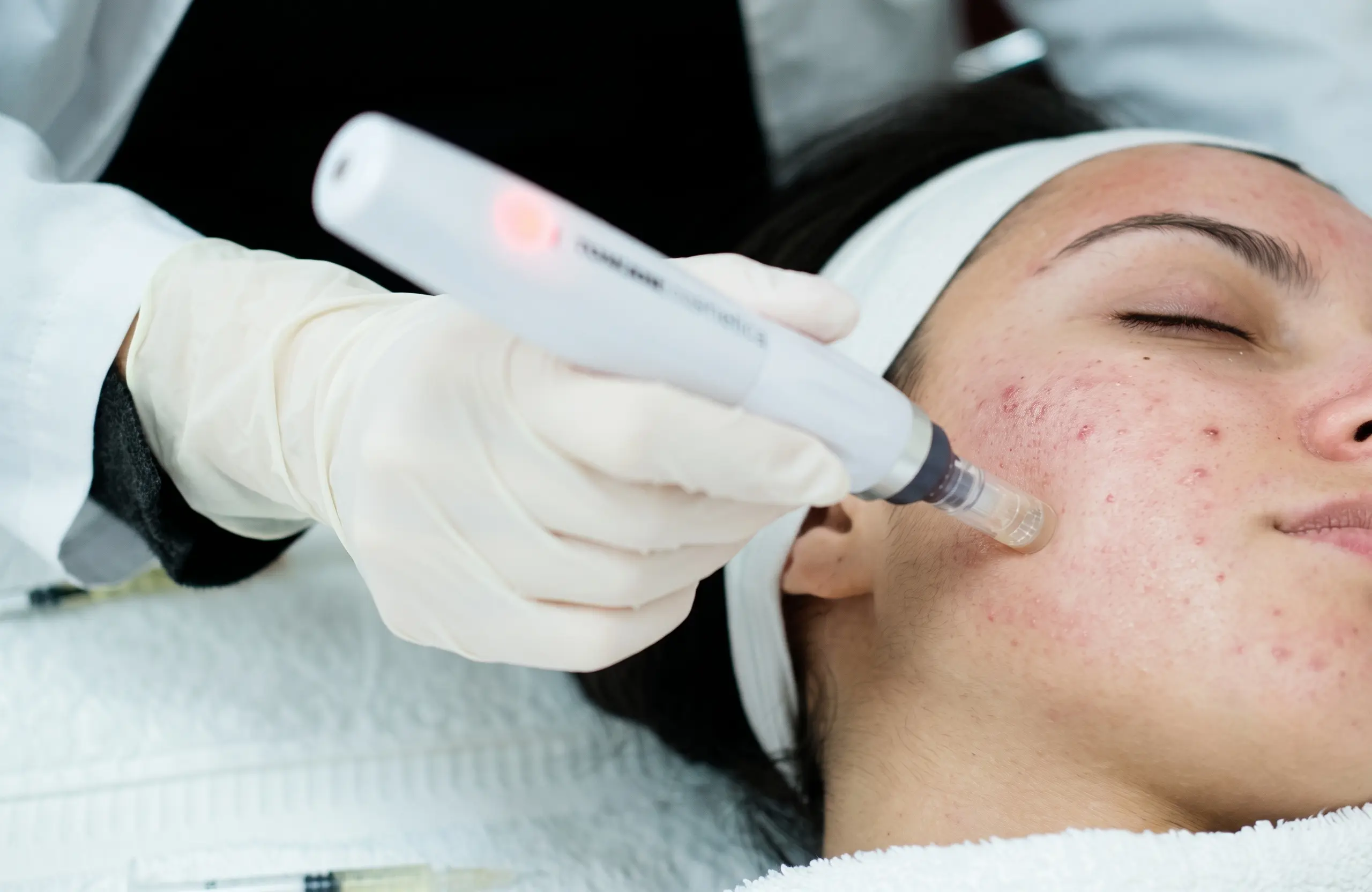
Telling the difference is the most valuable thing you can do before spending anything, because the two need completely different responses. Here is how to tell, and what laser genuinely does for the scars that are real.
Summary
Acne scar laser treatment works well for some scars and poorly for others, and the type you have decides which. Rolling and boxcar scars respond best, ice pick scars often need something other than laser, and the red or brown marks most people call scars are discoloration that fades on its own.
First, Are They Actually Scars?
Those flat marks have names. Post-inflammatory erythema is the pink or red patch left where a pimple was, common in lighter skin. Post-inflammatory hyperpigmentation is the brown or grey version, more common in deeper skin tones. Both are the aftermath of inflammation rather than lost tissue, and both fade over months to a couple of years without any procedure.
The practical implication is significant. Sun exposure prolongs both, so daily sunscreen does more for flat marks than most treatments do. If your concern is entirely color rather than texture, patience plus sun protection is a reasonable plan, and a topical or gentle vascular laser may speed it up.
The Types of Acne Scars, and Why Type Decides Treatment
That distinction predicts acne scar laser treatment results better than any device specification. Rolling and shallow boxcar scars respond best to resurfacing, because the goal is smoothing a gradient. Ice pick scars extend too deep and too narrow for laser to reach the base, so they often need a different approach entirely, such as focal chemical treatment or minor surgical techniques, sometimes before laser rather than instead of it.
Raised hypertrophic and keloid scars are a separate category again and are usually managed with injections rather than resurfacing. Most faces carry a mix, which is why we examine your skin first and build the plan around the scar types you actually have rather than around one device.

How Acne Scar Laser Treatment Works
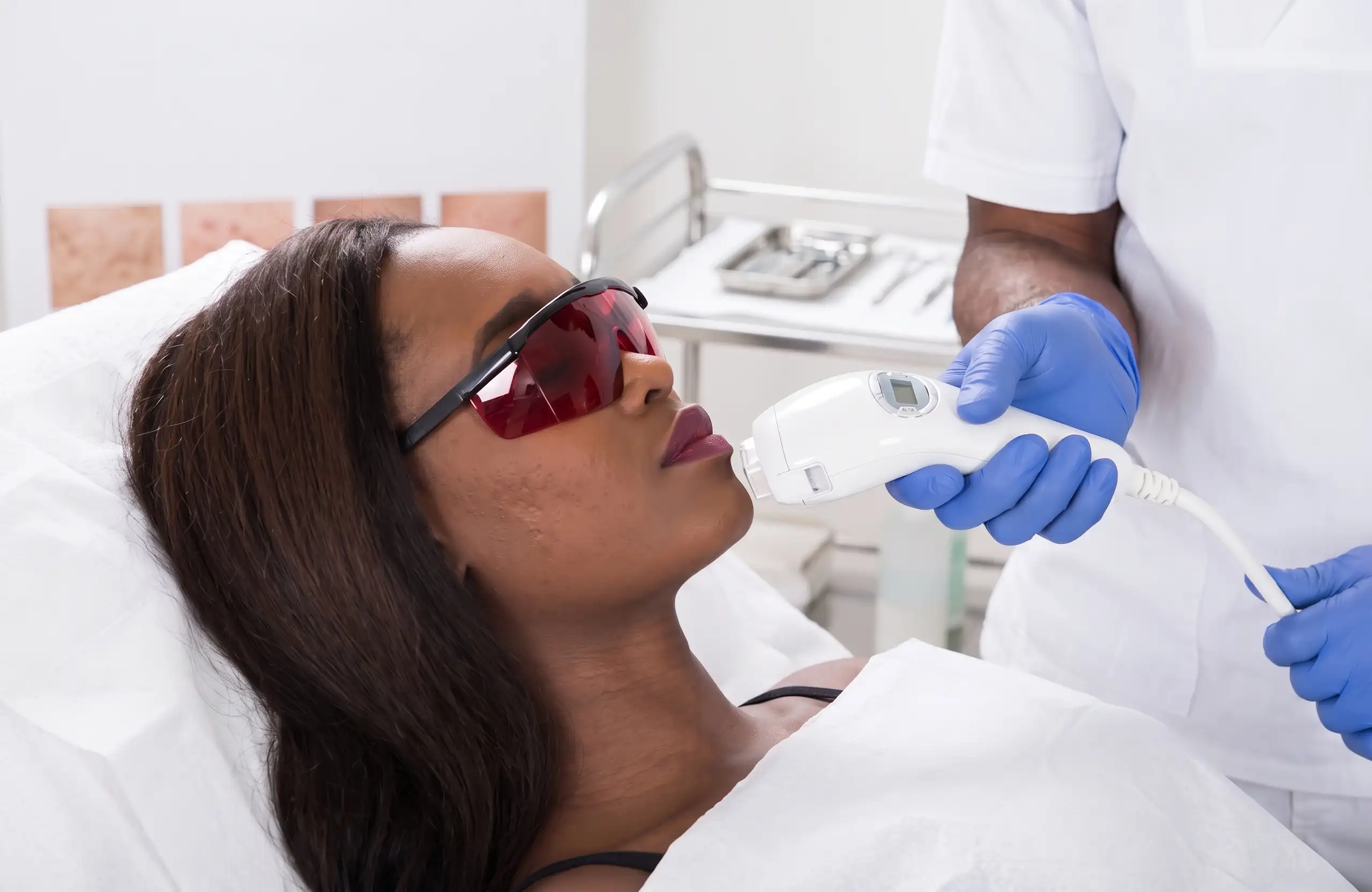
Non-ablative fractional lasers heat the dermis without removing the surface, so downtime is shorter but more sessions are needed. Ablative fractional lasers remove microscopic columns of tissue, which produces more remodeling per session at the cost of real recovery time, typically a week of visible healing. Which suits you depends on scar depth and how much downtime you can accept.
Radiofrequency microneedling reaches similar depths mechanically while delivering heat, and it carries less pigmentary risk on deeper skin tones. Our laser skin resurfacing page covers how these devices are used, and microneedling covers the needle-based route.
Do Laser Treatments Work? What Is Realistic
Nobody erases atrophic scars. Tissue was lost, and resurfacing rebuilds some of it rather than all. Patients who describe good outcomes usually mean their skin no longer catches shadows under overhead light, not that the scars are gone. We quote a realistic degree of improvement rather than a cure, and we tell you that before your first session rather than after it.
Photographs of scarring are easy to flatter, because lighting and angle change apparent scar depth more than most treatments do. Our own standard is to shoot before and after images under the same lighting and from the same angle, and to record which scar type was treated and how many sessions it took, so what you are shown is a fair comparison. At your consultation we will walk you through what that degree of change looks like on scarring like yours.
What About Natural or At-Home Options?
For true depressed scars, home remedies do not work. Lost dermal tissue is not rebuilt by lemon juice, vitamin E, or scrubbing, and some popular remedies make pigmentation worse by irritating skin. Over-the-counter retinoids and exfoliating acids can improve overall texture modestly, which helps at the margins without changing scar depth.
One thing worth doing first regardless: get active acne under control. Treating scars while new lesions keep forming means chasing a moving target, and we want active acne quiet before we start acne scar laser treatment. If you have taken isotretinoin recently, we will ask you to wait before any laser work.
Sessions, Skin Tone Safety, and What Affects Cost
Skin tone
Ablative and fractional lasers carry a genuine risk of post-inflammatory hyperpigmentation on deeper skin tones, meaning treatment can leave darker patches where it was applied. That risk is manageable with conservative settings, appropriate device choice, and often pre-treatment preparation. Our providers treat the full range of skin tones, and when an ablative device is not the safer call for you we will use RF microneedling instead and tell you why.
What affects cost
Acne scar laser treatment cost is driven by which device we use, the size of the treated area, how many sessions your scarring needs, and whether we combine procedures. Full-face treatment differs from a few isolated areas, and cosmetic scar treatment is generally not covered by insurance. Our pre and post treatment care guide covers recovery, and sun protection during healing is not optional.
The Takeaway
How much does acne scar laser treatment cost?
Do laser treatments work for acne scars?
How does laser treatment for acne scars work?
Are the red or brown marks after acne actually scars?
Which acne scars respond worst to laser?
Is laser safe for acne scars on darker skin?
New to MD Esthetics? Book A Consultation!
Written by
Our editorial team turns the questions patients ask in consultation into plain-language guides, then checks every claim against manufacturer labeling and current clinical practice.
This article is general education, not medical advice. Treatment plans, candidacy and results are individual: always speak with a licensed provider about your own care. Published May 11, 2026.
Keep reading
Laser Skin Treatments in Acton MA — Everything You Need to Know
If you have been searching for professional laser skin treatments in Acton, MA, you are in the right place. At MD Esthetics, our medical...
Laser Tattoo Removal Cost: What Actually Drives the Price
If you are searching for laser tattoo removal cost, you have probably already found a dozen pages quoting wildly different figures. The reason they...

What Is an IPL Photofacial? Benefits, Results, and Safety
An IPL photofacial is one of the more satisfying treatments in aesthetics when it is matched to the right person, and one of the...